What berberine is
Berberine is a plant alkaloid extracted from several botanical species including Berberis vulgaris (barberry), Berberis aristata (tree turmeric), Coptis chinensis (goldthread), and Hydrastis canadensis (goldenseal). It has been used in traditional Chinese and Ayurvedic medicine for thousands of years, primarily for digestive complaints and infections. Modern research has identified multiple molecular mechanisms behind its clinical effects, making berberine one of the most studied plant-derived compounds in contemporary supplement science.
It is distinct from most gut health ingredients in that it does not simply add bacteria (probiotics) or feed them (prebiotics) — it directly modifies the gut environment and microbial community composition through its own pharmacological activity, making it a complementary rather than redundant addition to a probiotic formula.
Microbiome modulation
Several published clinical trials have demonstrated berberine’s capacity to directly modify gut microbiome composition. A landmark study published in Cell Metabolism (2019) found that berberine treatment significantly altered gut microbiome composition in obese subjects, increasing short-chain fatty acid-producing bacteria while reducing harmful gram-negative bacteria associated with insulin resistance and inflammation.
Mechanistically, berberine has antimicrobial activity against several pathogenic bacteria commonly found in dysbiotic guts — including certain Clostridium and Bacteroides species that contribute to gut inflammation and intestinal permeability. At the same time, berberine promotes the growth of beneficial bacteria including Akkermansia muciniphila, a species strongly associated with gut barrier integrity and metabolic health. This selective antimicrobial-plus-prebiotic-like effect on the microbiome is unusual among supplement ingredients and explains why berberine is a meaningful complement to direct probiotic supplementation.
Blood sugar and gut connection
The connection between blood sugar regulation and gut microbiome health is bidirectional and clinically significant. Elevated blood glucose creates a gut environment that favours glucose-fermenting harmful bacteria over the fiber-fermenting beneficial bacteria that the microbiome needs. Conversely, a dysbiotic microbiome reduces the production of short-chain fatty acids that enhance insulin sensitivity, creating a vicious cycle of metabolic and gut dysfunction.
Berberine interrupts this cycle through multiple mechanisms. Multiple randomised controlled trials have demonstrated berberine’s ability to reduce fasting blood glucose and post-meal glucose spikes to a clinically meaningful degree, with a 2008 meta-analysis in the Journal of Clinical Endocrinology and Metabolism finding effects comparable to metformin at standard supplemental doses. By stabilising blood glucose, berberine directly improves the gut environment for beneficial bacterial populations.
AMPK activation
The primary metabolic mechanism of berberine is activation of AMP-activated protein kinase (AMPK) — an enzyme often called the “master metabolic switch” because it coordinates cellular energy metabolism, glucose uptake, fat oxidation, and mitochondrial function. AMPK activation by berberine partially explains why the compound produces effects on blood glucose, metabolic rate, and body composition that are mechanistically similar to exercise-induced metabolic adaptation at the cellular level.
For gut health specifically, AMPK activation in intestinal cells supports the integrity of tight junction proteins that maintain gut barrier function — reducing intestinal permeability (the so-called “leaky gut” phenotype) that allows bacterial endotoxins to pass from the gut lumen into systemic circulation, where they contribute to chronic low-grade inflammation.
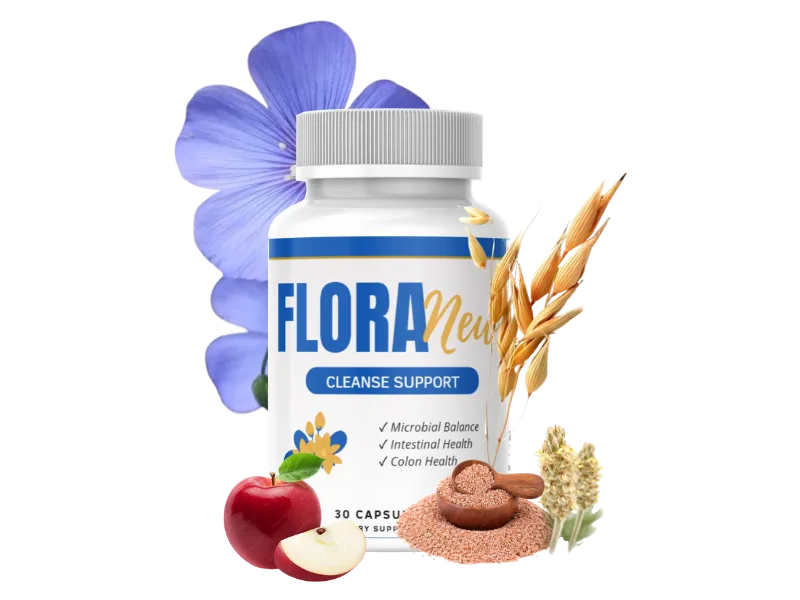
Berberine in FloraNew
In FloraNew’s 8-ingredient formula, Berberine occupies the microbiome-modulating and metabolic support role that neither probiotic strains nor prebiotic fiber can fill. While the Multi-Strain Probiotic Blend adds beneficial bacteria and Inulin feeds them, Berberine reshapes the gut chemical and bacterial environment that determines whether those bacteria can establish and thrive. Together, the three ingredients — probiotics, prebiotics, and berberine — create a more complete gut rebalancing system than any one of them provides alone.
Explore FloraNew pricing, guarantee and the complete 8-ingredient formula.
🌿 View FloraNewMore articles
More on the FloraNew blog. Official site for pricing and guarantee.